Cemented and screw-on crowns and bridges on dental implants
Depending on the attachment of crowns and bridges to dental implants, there are two main practices:
1. The old way – cemented bridges and crowns on dental implants.
Cemented bridges and crowns, if necessary, are destroyed and then it is necessary to make new ones.
Cementation is a process that carries risks of remaining pieces of hardened cement, especially with deeper dental implants. These fragments can cause inflammatory processes in the bone and ultimately bone loss and subsequent loss of the dental implant.
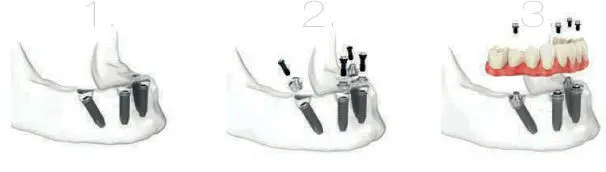
2. The modern method is the twisting bridges and crowns.
– With screw-in bridges and crowns, it is always possible for them to develop and separate from the dental implants, make the appropriate correction and return to the patient’s mouth again. When there is a temporary structure, the patient is never without teeth in the mouth.
– With them, the cementing of the crown to the abutment /abutment/ of the implant takes place outside the mouth and then the abutment and crown – one unit – are screwed to the implant, i.e. there is no risk of residual cement around the dental implants. The possibility of adhesive cement remaining, which can cause pathological inflammatory processes, is eliminated, especially if the dental implants are located deeper in the bone. The new forms of abutments on dental implants are the so-called Universal base or Titanium base. An opening remains on top, through which the crown is attached to the dental implant with the help of a screw. After the crown is fixed to the implant by the screw, the hole is closed with composite.
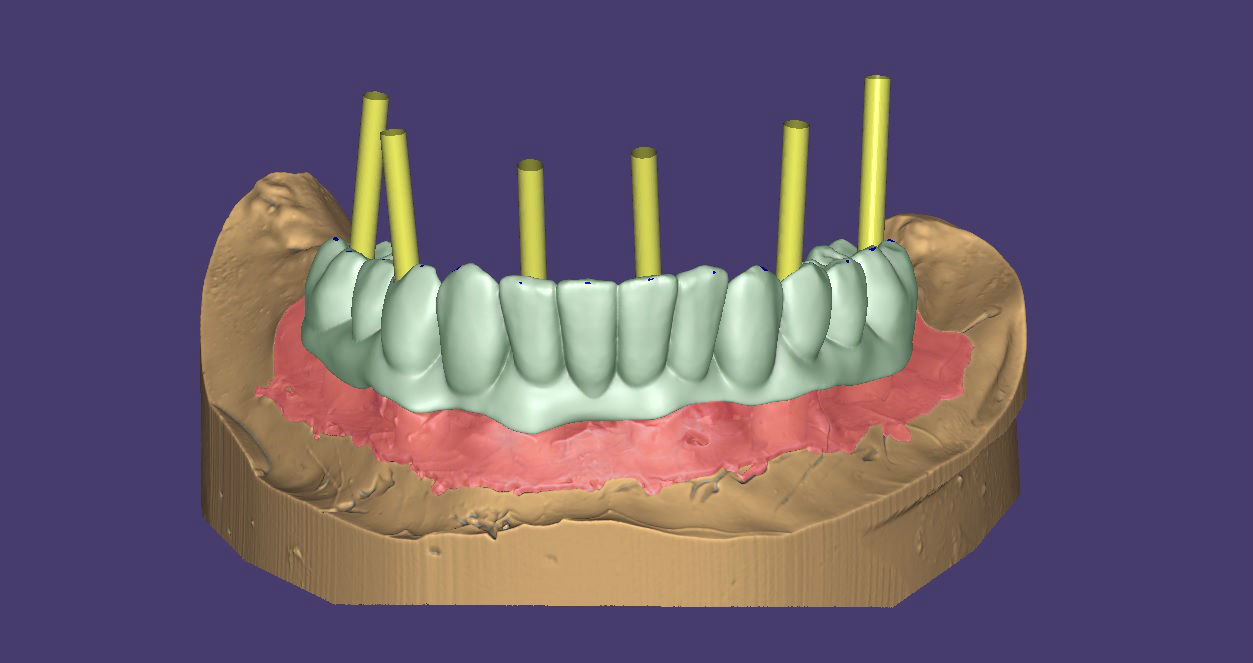
– Screw-in crowns and bridges require the mandatory use of – scanning of the object /inside the mouth or on a model/, virtual 3D design, cutting from a milling machine, sintering and finally coloring. These advanced CAD/CAM technologies enable the achievement of extreme accuracy and precision.
In the Denta Consult dental laboratory, the production of screw-on crowns on dental implants is a priority.
In it, the dental doctors scan and design the crowns on natural teeth and dental implants.
This is your guarantee for the quality of your treatment from the point of view of prosthetics – dental crowns on dental implants.

Regarding the method of fixing the crowns to the abutment /abutment/ of the implant, the cemented crowns definitely give way to screw-in crowns.
Screw-in crowns and bridges on dental implants are the best and modern option from a prophylactic point of view in terms of bone and soft tissues. The harmony and pink-and-white aesthetics of natural teeth, soft tissues and crowns on implants is perfect. It is the best prosthetics on dental implants created so far by modern science and manufacturing. The mucosa over screw-on crowns on dental implants has the same colour and shape as living natural teeth.
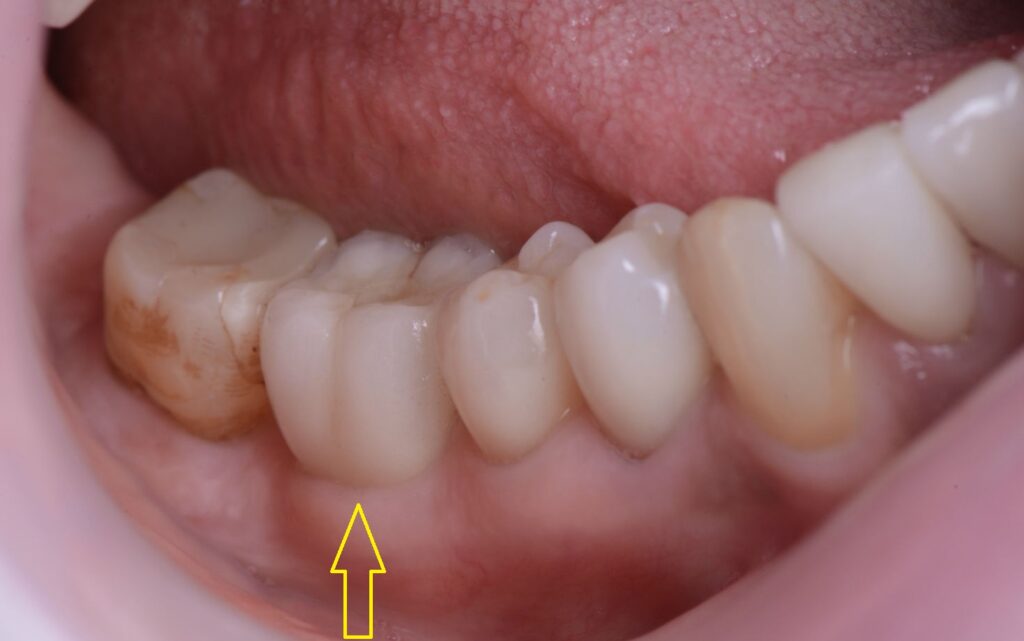

Here is the place to note – which is better? – Dental crowns in a block on multiple, side-by-side dental implants or separated from each other and standing alone like natural teeth. From the point of view of hygiene and aesthetics, it is better that the crowns on dental implants are separate. When dental implants are shorter, thinner, or not placed in a prosthetic position, the dentist may decide that “bonding the crowns in a block” is better for you. Prosthodontics on more dental implants is more difficult and complicated. When we perform prosthetics on dental implants with cementable bridges, in case of large bone loss, the crowns on the implants are significantly longer. The proportions of the teeth and the harmony of the red and white aesthetics are disturbed. The patient’s teeth are longer than his natural teeth. Very often the longer teeth are covered by the lips and for the majority of patients this is not a problem.
Longer teeth can also be obtained with screw bridges with the use of the so-called non engaging abutments. This can be corrected by soft tissue gingival surgery, which should be performed early in the surgical stages. In the case of large bridge structures with arch stabilization – horseshoe type, another problem appears. This is the frequent inability to ensure parallelism between the abutments / abutments of the individual implants. These situations are solved with special supra-implant abutments. At Nobel Biocare they are called Multi Unit. In this case, the attachment of the bridge to the dental implants is screwed and two additional elements are used above the implants – Multi Unit abutment and special cones glued to the bridge – Gold Copping. In this case, we are talking about using three-piece implants to screw the bridges to the dental implants. With these bridges, the teeth are of normal size, and the lost bone is restored prosthetically with pink-colored composite or Zirconia.
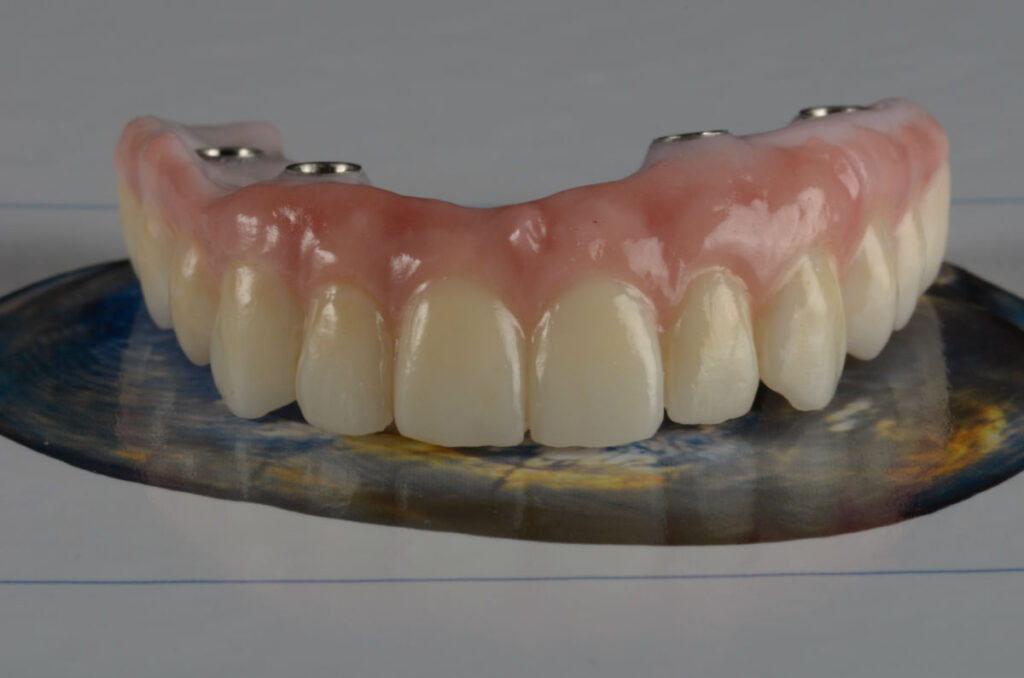
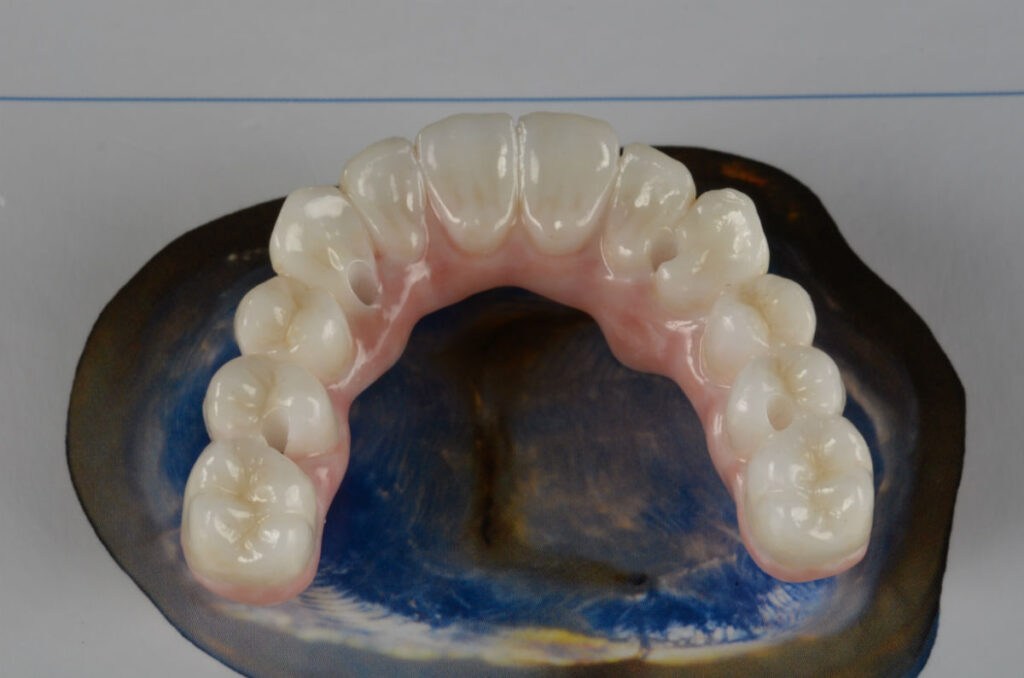
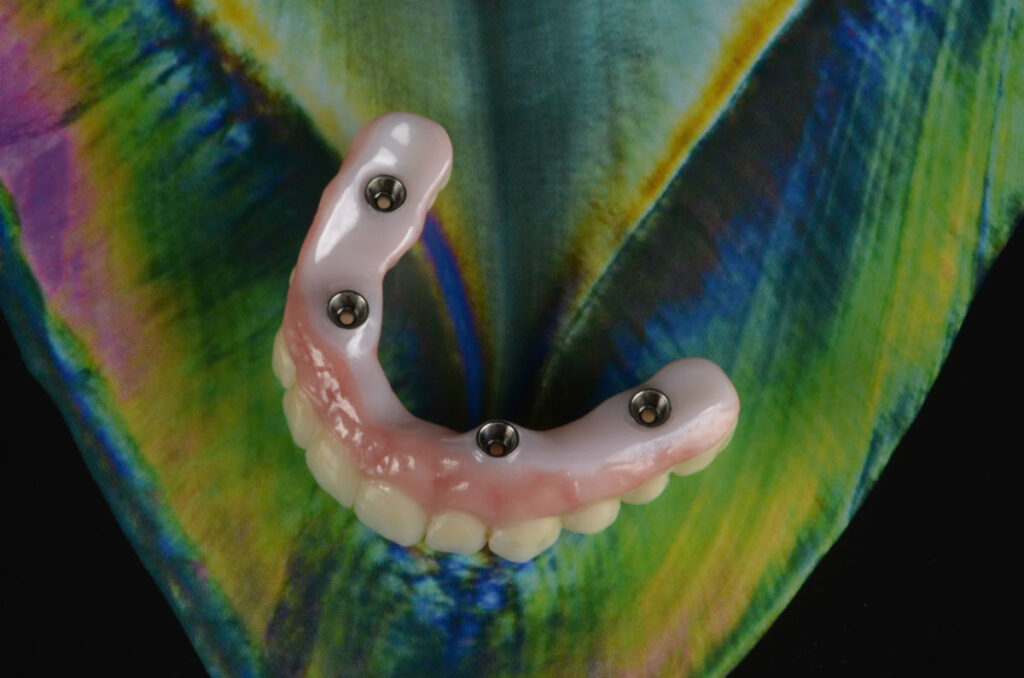
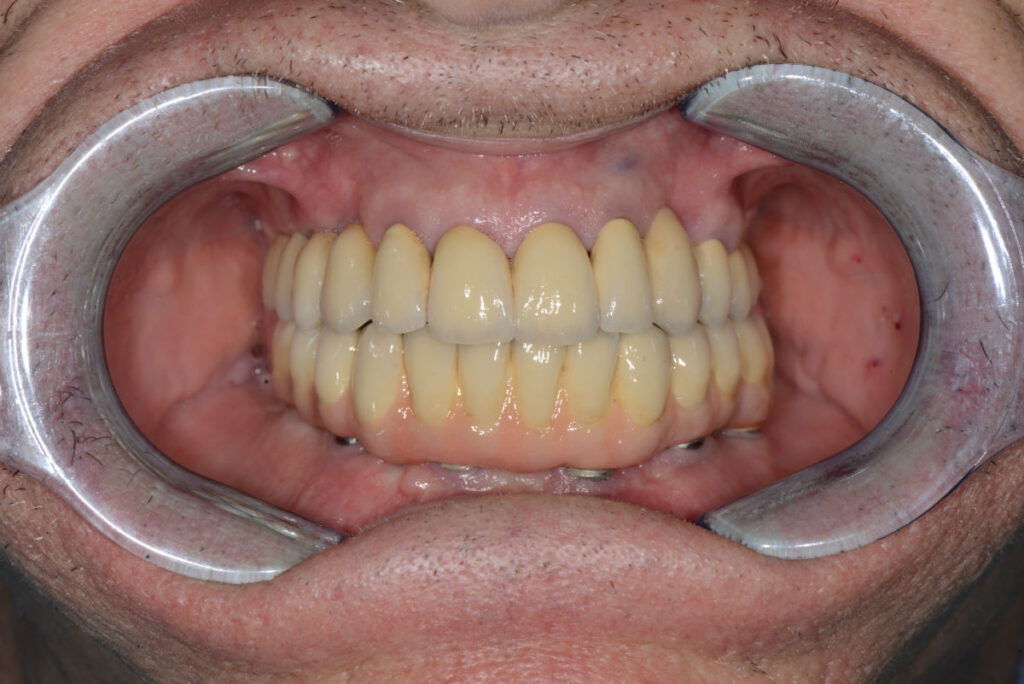
In terms of materials, we must say that metal-ceramic crowns on dental implants are gradually becoming a thing of the past. Modern all-ceramic Zirconia crowns are increasingly being used, but Zirconia itself is not a panacea. Many people cheat by asking “how much does Zirconia cost you” and getting the answer they want to hear… It’s just like asking: “How much does a dental implant cost Doctor”?
Read in detail in the article: “Pricing schemes for your treatment with implants.”
Unfortunately, these two questions are very far from real dentistry…