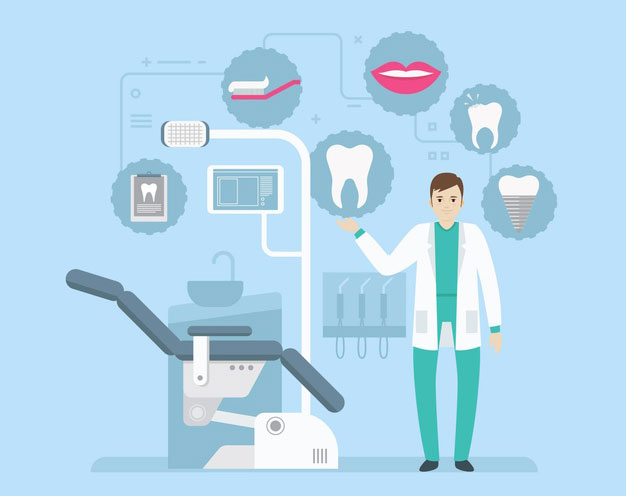
In our clinical practice, we meet with patients daily to discuss a plan and options for treatment with or without implants. And although we strive to approach each patient individually, you will be surprised how often different people, of different ages, ask us the same questions. In this material, we have tried to briefly present our most frequently asked questions and the answers to them about treatment with dental implants:
1st question. Can my body reject the implants? implantand?
Placing dental implants as a means of assisting dental treatment has been used for over 70 years and has its own strictly established rules and principles. With their compliance by doctor and patient, the success rate of implant treatment is extremely high. However, in a small percentage of cases, it is possible to have a rejection of the dental implant. Failure in treatment with dental implants, depending on which stage of the treatment it occurs, can be divided into early – immediately after implantation and late – after loading the implant, when a crown has already been placed on it (you have a tooth in your mouth). The most common reasons for early rejection of dental implants are infection, non-observance of asepsis and antiseptic rules, incorrect assessment of the clinical situation.
Protects us from early rejection:
- prescribing an antibiotic when indicated before surgery
- good surgical planning
- compliance with the rules for asepsis and antiseptics
- good medical history
- precise work of the dentist during the surgical intervention
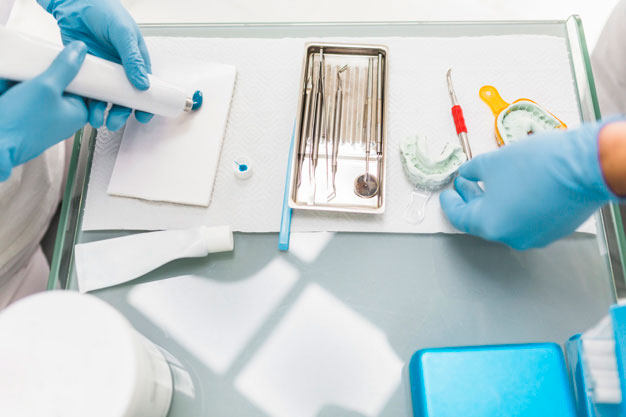
The most common reason for late rejection of dental implants is their incorrect loading – incorrect prosthetics with dental crowns on them (for this, it is extremely important to prepare a correct overall treatment plan with dental implants).
Protect us from late rejection:
- good prosthetic treatment planning
- correct choice of crown or bridge construction on dental implants
- precise work of the dentist during the prosthetic restoration
You can get more information from the article “Dental implants – guarantee”.
2nd question. Could I be allergic to dental implants?
Dental implants are made of 99.9% titanium. It is a material with excellent biocompatibility. The body does not develop an allergy to it. This is the reason why it has been used in medical orthopedics for many years. There is no difference between the material from which dental implants are made and the material used to make artificial joints and osteosynthesis tools used in medicine – traumatology and surgery.
3rd question. Will dental implants hurt?
During the surgical intervention, modern anesthetics are used, which eliminate the feeling of pain. After the operation, painkillers are prescribed, which are used in case of discomfort during the recovery period. Modern pharmacy is at an extremely high level. In our clinic, the word pain is unknown.
More information can be obtained from the articles “Dental implants and pain” and “Dental implants and general anaesthesia”.
4th question. What is the placement procedure implantand?
Treatment with implants in most cases takes place in three stages:
Stage 1 – placing an implant – placing a titanium screw in the bone.
Stage 2 – uncovering the implant and placing a sulcus former.
Stage 3 – placement of an abutment (the component that extends above the gum and supports the crown).
Stage 4 – placement of a crown (you already have a tooth in your mouth).
Depending on individual characteristics and how long it has been since the loss of the natural tooth, additional procedures may be required to be performed before or after the implant is placed.
You can get more information from the articles “Dental implants – methods of implantation” and “Dental implants – methods of prosthetics”.
5th question. How long will it take to recover from dental implants?
After surgery, there may be slight swelling, which is greatest on the third and fourth day. In many operations, the swelling is absent – this depends on the methodology and the volume of the implant placement operation. Painkillers and anti-inflammatory drugs are prescribed to reduce the discomfort that may occur after surgery. Recovery depends on the individual response of the body. In most cases, within a week, all discomfort has subsided.
The sutures are removed on 10-14 days.
6th question. What does it depend on if I can get implants?
The conditions for placing implants depend on a combination of your general health condition, accompanying diseases, how long ago the missing tooth was extracted, for what reason and under what conditions, the amount of bone available, the amount of soft tissue available, the condition of the remaining teeth in the mouth and much more. During the examination and Ro-3D analysis, all factors are taken into account. If necessary, additional tests are ordered. After a thorough analysis of all the collected information, a treatment plan is drawn up.
You can get more information from almost all the articles published by us in the “ARTICLES” category.
7th question. How much will it cost?
This is a question that we can answer only after a detailed examination, in which the possibilities and methods of treatment with dental implants will be assessed. Patients in our clinic are informed in advance of the medical and financial part of their treatment plan.
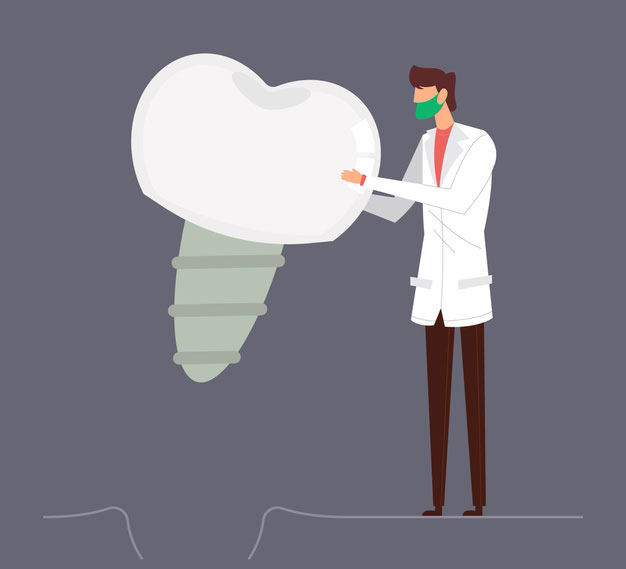
For us, it is right to put medicine before money, i.e. to determine the methods and means of treatment with implants or without implants and on this basis to make the financial calculation. Very often the first question is: “How much does the implant cost?”. This puts the “cart before the horse” and the error is already there.
The main rule is: “Medicine determines money, not money determines medicine.”
A short price list can be found here.
You can get more information from the article “Pricing Schemes for Your Implant Treatment” in the ARTICLES category.