
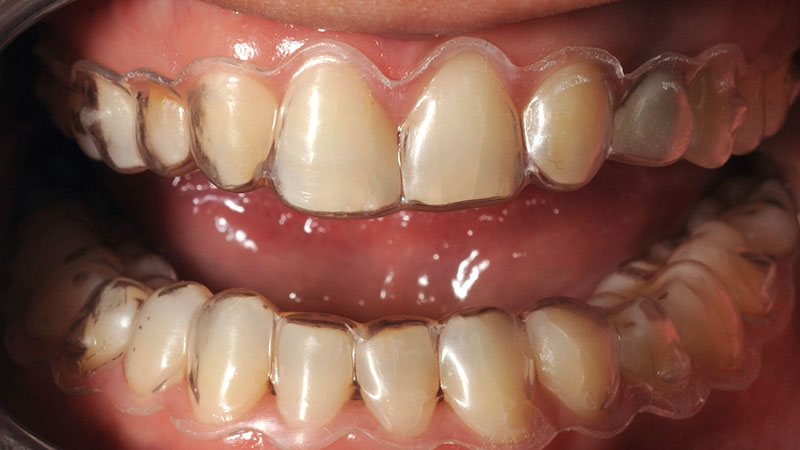
Orthodontic treatment at Denta Consult aligns the teeth and corrects the bite using braces or aligners (clear trays), then maintains the result with retainers. The aim is to restore harmony between the position and function of the teeth within the masticatory system, also bringing a visible improvement in appearance. Orthodontic treatment addresses problems with tooth position and the bite, as well as temporomandibular joint problems. It can be used on its own or combined with other treatments, for example before dental implants or veneers, when a minimally invasive approach is sought.
When is orthodontic treatment needed?
Orthodontic treatment is recommended when the teeth or bite affect function, hygiene or aesthetics. The most common reasons are:
- Crowded teeth (overlapping teeth). They are difficult to clean and more prone to decay and gum inflammation.
- Gaps between teeth. These are often visible between the front teeth or where a tooth is missing.
- A misaligned bite: a deep bite (the upper teeth overlap the lower teeth excessively), an underbite (the lower teeth sit in front of the upper teeth), an open bite (the front teeth do not meet) or a crossbite.
- Shifted or tilted teeth following the loss of a neighbouring tooth.
- The need to create space for an implant or crown. When the teeth around a gap have tilted, we first straighten them and then replace the missing tooth.
What orthodontic treatment methods are available?
| Method | What it looks like | Is it removable? | Suitable for |
|---|---|---|---|
| Braces | Small brackets bonded to the teeth and connected by an archwire | No | Most cases, including complex ones |
| Aligners | Clear, almost invisible trays | Yes | Patients who do not want braces; case complexity is assessed during an examination |
| Retainers | A thin wire behind the teeth or a clear tray | Depending on the type | Every patient after active treatment is completed |
Treatment with braces
Braces consist of small brackets bonded to the teeth and connected by an orthodontic archwire. The wire applies continuous, controlled pressure, gradually moving the teeth into their planned positions. At follow-up appointments, the wire is replaced or adjusted. Braces remain fixed until treatment is complete. They therefore require more careful cleaning: food collects around them, and special brushes are used to clean between the teeth.
Treatment with aligners
Aligner treatment is an alternative to conventional orthodontic treatment with braces. Aligners are removable clear trays, similar to whitening trays. Their digitally designed shape guides tooth movement. Each successive tray moves the teeth slightly until they reach their planned positions. Aligners are suitable for patients who do not want braces but wish to improve the position and appearance of their teeth. Maintaining oral hygiene is straightforward: remove the trays, brush your teeth and put them back in. To work effectively, the trays must be worn for most of the day and night, and removed only for eating and brushing. Digital technology allows you to see the planned final result before starting treatment. More about the method: Orthodontic treatment with aligners.
Braces or aligners: which should you choose?
The choice between braces and aligners depends on the complexity of your case, how consistently you can wear removable trays and your personal preferences. Aligners are less noticeable and make cleaning easier, but they work only when worn for enough hours each day. Braces work continuously and do not depend on the patient remembering to put them in. The appropriate method for you is determined after an examination and bite analysis.
What are retainers and why are they needed?
A retainer holds the teeth in their new positions after active treatment is complete. Without one, teeth tend to move back towards their original positions. There are two types of retainers: fixed retainers, consisting of a thin wire bonded to the inner surfaces of the front teeth, and removable retainers, consisting of a clear tray worn mainly at night. Your dentist determines how long a retainer should be worn in each case.
Orthodontics before dental implants and other treatments
As part of combined treatment, orthodontics creates space for dental implants. When a tooth is missing, neighbouring teeth can gradually tilt into the gap, narrowing it. Braces or aligners straighten the teeth and create a space of the correct width for an implant. This approach is also used to replace teeth that are missing from birth, most commonly the upper lateral incisors. Orthodontics can also be combined with aesthetic dental treatment: when teeth are properly aligned, less tooth structure needs to be removed for veneers or crowns.
What does orthodontic treatment at Denta Consult involve?
- Examination and consultation. The dentist listens to your concerns and examines your teeth, bite and temporomandibular joint.
- Diagnostics. A panoramic X-ray is taken on site, with 3D imaging (CBCT), intraoral scanning and photographs where needed.
- Digital plan. We plan tooth movement and show you the expected final result before treatment begins.
- Active treatment with braces or aligners and regular follow-up appointments.
- Maintaining the result with a retainer.
Frequently asked questions
How long does orthodontic treatment take?
The duration depends on how far the teeth need to move, the patient’s age and the treatment method. We provide a specific timeframe after an examination and digital planning.
Is there an age limit for braces or aligners?
Teeth can also be moved in adults. The gums and bone around the teeth must be healthy, so we first assess the periodontal tissues in adult patients.
Does orthodontic treatment hurt?
During the first few days after braces are fitted, an archwire is changed or a new aligner is introduced, your teeth may feel tender when eating. This sensation usually subsides within a few days.
How much do braces and aligners cost?
The price depends on the method, complexity and duration of treatment. We provide a specific price after an examination and treatment planning.
How do you get started?
If you would like to find out whether orthodontic treatment is right for you and which method would be more suitable, a clinical consultation at Denta Consult lasts a full 60 minutes. During this time, the dentist examines your teeth and bite, explains the options, including their duration and cost, and outlines the specific next steps.