
PREFACE
We bring to your attention Dr. Pierre Dimitrov’s article “Biomimetic DENTAL MEDICINE (adhesive)” without any abbreviations and editing, as he wrote it for you.
It is part of the “business card” of Denta Consult for your natural and brilliant smile.
It is part of the philosophy of Denta Consult for biological and medically sustained treatment.
It is intended for people who want to penetrate deeply into the knowledge of modern dentistry.
The philosophy of the biomimetic approach in modern dentistry is a fundamental part of the philosophy of all Denta Consult specialists, regardless of the field in which they work:
– dental implantology – dental implants and modern prosthetics on them – crowns on single implants, bridges on dental implants, All-on-4 and All-on-6 (FP-1).
– adhesive restorative dentistry – ceramic veneers and overlays
– dental prosthetics – all-ceramic crowns on natural teeth
– orthodontics – children’s (in accordance with the natural development of the child’s body)
– orthodontics – age-related (according to the individual anthropometric characteristics – bite of each individual) in the biological unity of teeth, crown, joint, muscles and ligaments.
– dental abrasion, abrasion with anthropometric and functional restoration of the bite, undergoing splint therapy.
Denta Consult applies the concept of Prof. Slavicek (Austria) for the prevention and restoration of teeth to all the above-mentioned sections of modern dentistry.
A concept that requires a modern, digital condylographic examination and a modern, digital dental laboratory.
DCLab is equipped with the necessary equipment and technique – again according to Prof. Slavicek.
With his knowledge and hard work, Dr. Pierre Dimitrov went beyond the boundaries of the Republic of Bulgaria.
Dentists from all over the world with pleasure and admiration listen to his lectures at symposia and congresses.
(UK – London – 2024, USA – Los Angeles – 2025, Mexico 2026, India – 2026)
Dr. Pierre Dimitrov 100% professes and develops the philosophy of Denta Consult:
“We don’t make teeth, we prevent and treat people”, the natural end of which is your natural, individual, unique and brilliant smile.
All of us at Denta Consult are proud that Dr. Pierre Dimitrov is part of our team!
Dr. Asen Marinov – father
“Look deep into nature and then you will understand everything better.” Albert Einstein‘s
What is the biomimetic approach in modern dentistry?
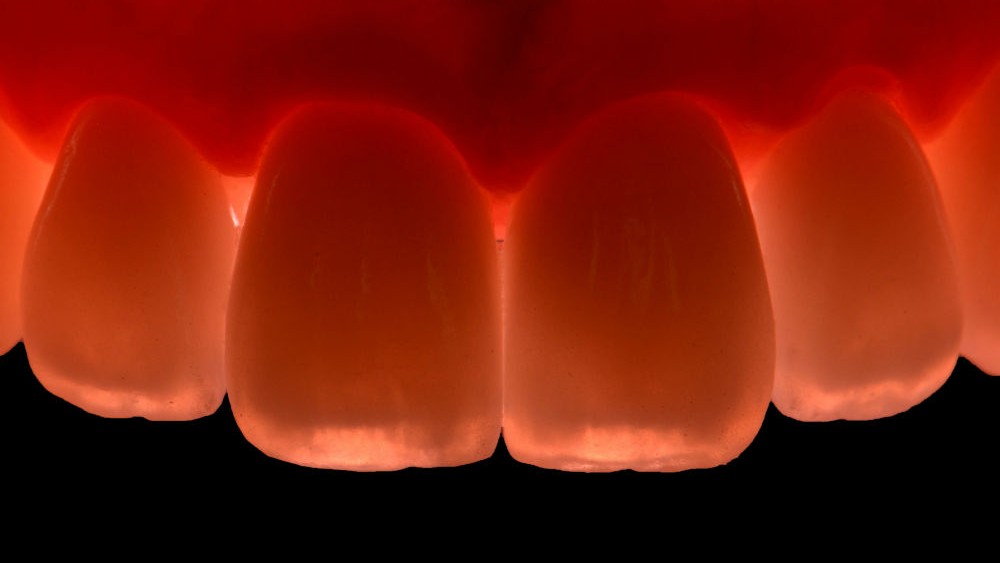
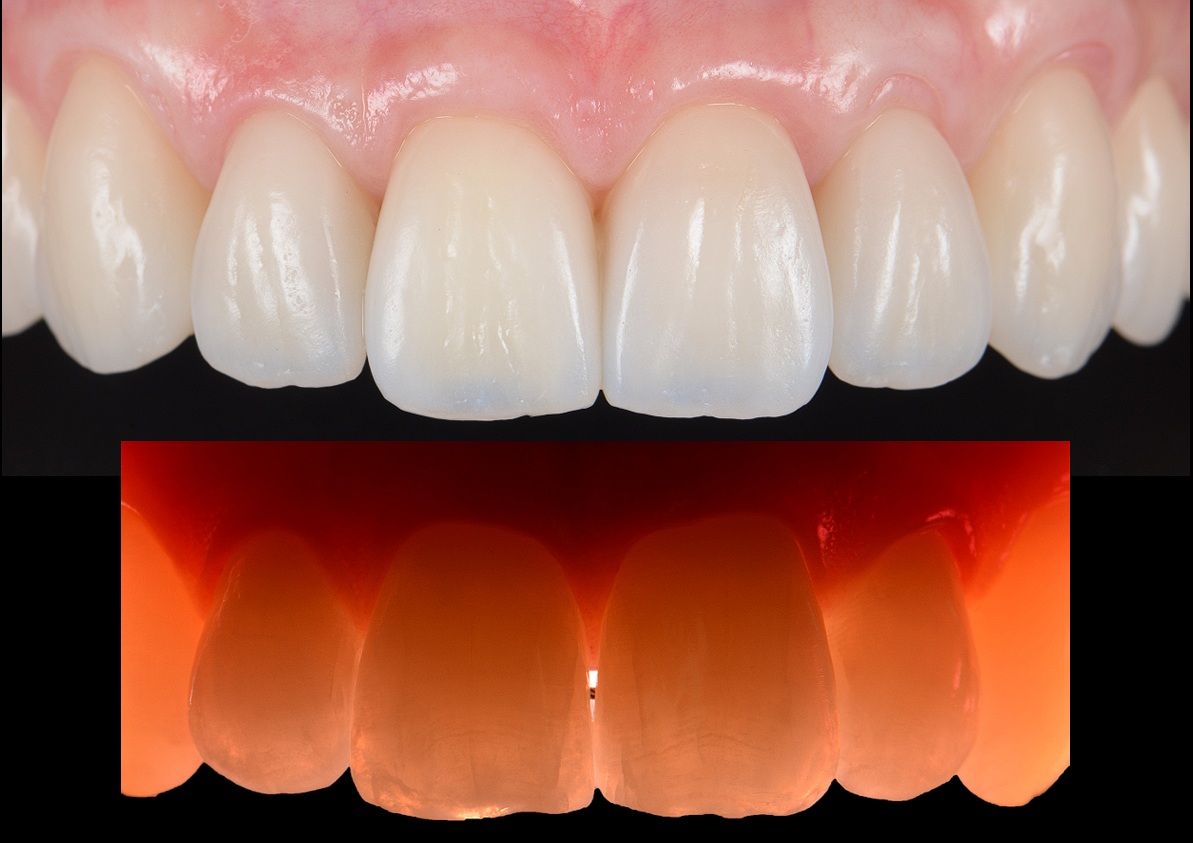
The term bio-mimetics is derived from the Greek words “bios”, meaning “life” and “mimetikos”, meaning “imitating” or “imitating”. In the field of modern dentistry, the combination has been imposed as a symbol of the aspiration for an extremely close and precise recreation of the form, function, mechanics and aesthetics of natural dentition. Admiration for the divine creation of nature, combined with modern dental materials and technologies, reveals the possibility to prevent, preserve or restore imperceptibly from the smallest defect in the dentition to overall problems of the chewing apparatus, and the result is a long-lasting, healthy and natural-looking smile.
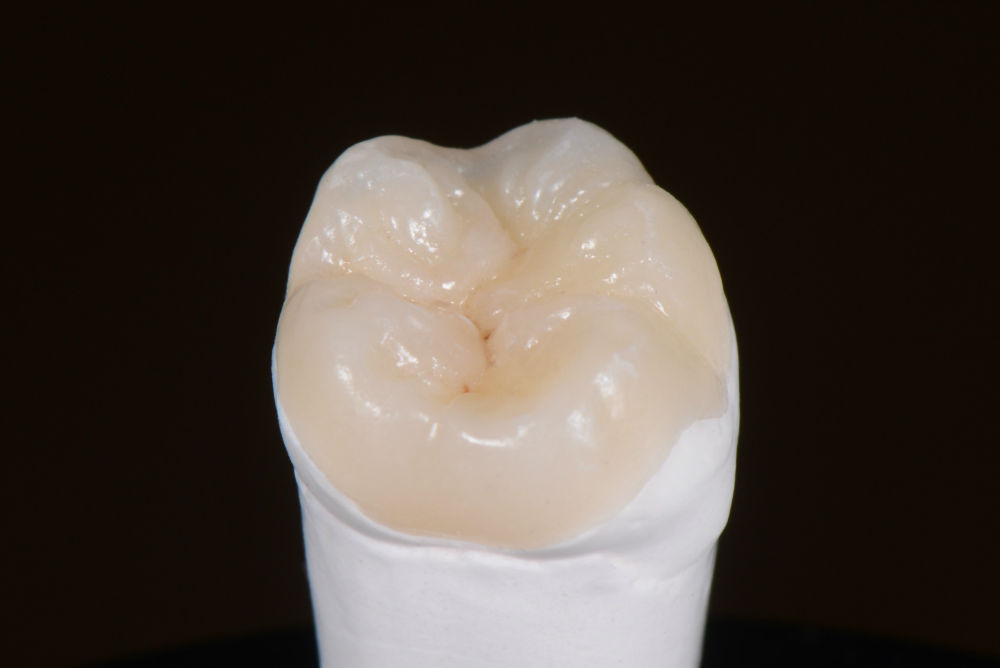
Basic principles of biomimetic adhesive dentistry
All the principles of biomimetic dentistry are derived from the perfect standard – the healthy natural dentition, in which there is no form of disease of both the hard tissues (teeth, bones and joints) and the soft tissues (gums, muscles).
1. The first basic principle is related to cognition, with a deep admiration for the morphology (tooth shape), function (eating, speech, breathing), mechanics (distribution of masticatory load) and esthetics (smile) of the natural dentition. Knowing these features in depth is fundamental in trying to reproduce them in the course of any treatment. Knowledge is a vast quantity, an infinite amount of information that is too much for the human mind to fully absorb, and the more we know, the more we understand that we must learn. At the same time, for nature, all this happens casually with unequivocal purpose and divine precision.
2. The second principle of biomimetic dentistry is directly related to the knowledge of natural dentition, because it conditions the understanding that only they are perfect and capable of faithfully serving a person throughout his life, as long as it is preserved healthy. We call this principle prevention and prophylaxis. They aim to preserve healthy teeth, gums, bones, muscles and joints, as well as their proper development in the course of human life. Through early and non-invasive intervention, it is possible to eliminate all oral diseases, including caries, its complications, inflammation of the gums (gingivitis) and bone (periodontitis), tooth wear or orthodontic anomalies (misaligned teeth). Unfortunately, for the majority of patients, it is already too late to use this approach alone. They have too much dental work done in their mouths, and even the most perfect ones don’t last forever and will need maintenance, repairs and, inevitably, replacement. For the next generations, our children, it is not too late. By properly educating parents and children as early as possible in proper oral hygiene, the importance of a healthy diet, elimination of harmful habits, care for the correct development of the jaws, it is possible to ensure long-term health of the entire complex of the masticatory apparatus and reduce many times the need for extensive and invasive treatment, doomed to failure in the long term. It is prevention and prophylaxis that should become the main focus of our professional class in the name of better oral health.
Despite all efforts in the prevention of oral diseases, the need for treatment in certain situations will continue to arise.
3. The third principle is minimal invasiveness, which aims to achieve the maximum result through the least possible intervention. The development of new technologies and treatment strategies for specific problems gives us the opportunity to restore dental health without the need for invasive interventions. If the presence of caries is diagnosed in sufficient time, through remineralization therapy it is possible to strengthen the structure of the dental tissues, and the caries to undergo reverse development without the need for the tooth to be prepared. If white spots of different origins are observed on the teeth, it is possible to treat them using modern protocols (microabrasion, infiltration, external whitening) and the spots will disappear. This principle also applies to the need for more extensive treatment, such as cases of tooth wear. Instead of preparing the teeth to make room for the normal tooth shape, it is necessary to change the bite and create the necessary space, which we then “fill” with a restorative material.
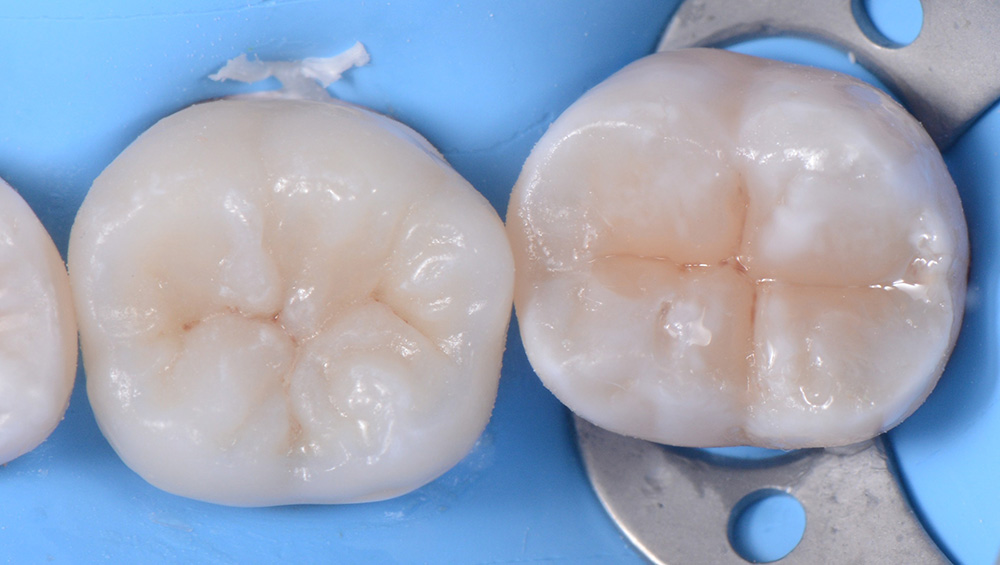
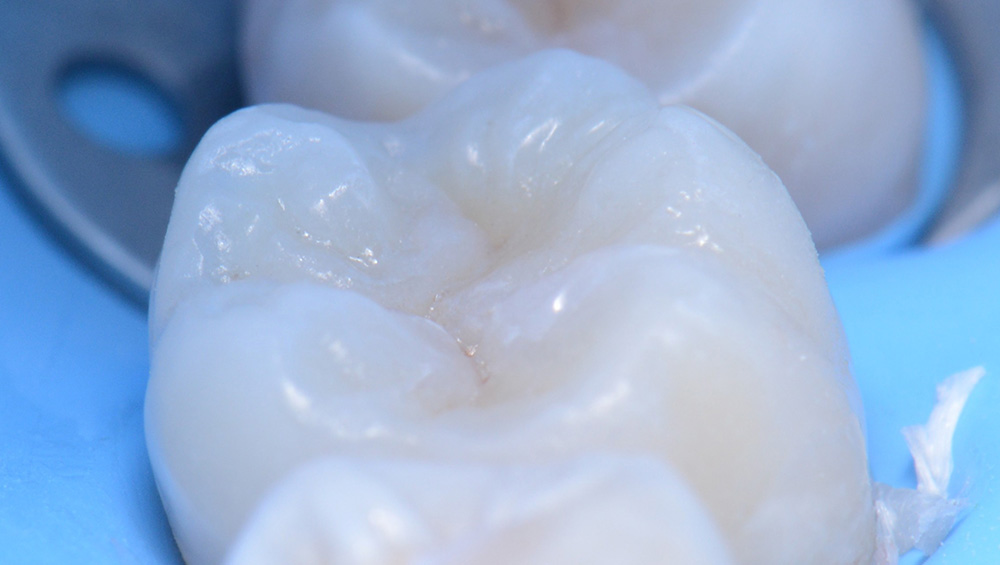
4. The fourth principle of the biomimetic approach in modern adhesive restorative dentistry is entirely based on the perfect knowledge and application of the correct materials. The replacement and restoration of damaged or missing tooth structures must be carried out using materials that perfectly resemble the mechanical (hardness, strength, flexibility) and optical (colour, transparency) qualities of natural enamel and dentin. Tooth enamel is the highly mineralized and extremely hard outer shell of the natural tooth that covers and protects the more flexible and collagen-rich underlying dentin, which in turn envelops the dental pulp (nerve). Enamel and dentin are connected by an enamel-dentin complex, through which the two structures function as one and provide the perfect symbiosis of strength and flexibility. This is precisely what enables the natural tooth to withstand the enormous and continuous load to which it is subjected in the oral cavity. Through the combination of modern adhesive systems, composite (photopolymer) and ceramic materials, we are able to restore the natural characteristics of tooth structures. Photopolymers provide the higher flexibility inherent to dentin, while ceramic materials mimic the strength and hardness of enamel and most closely approximate its colour and transparency. The latest generations of adhesive systems provide us with the possibility to reliably and long-lastingly connect these materials to the remaining healthy dental tissues, without the need for unnecessary removal of structures for the purpose of mechanical retention.
5. Along with the correct choice of restorative material, the techniques and tools used are also of key importance. All adhesive techniques are performed under strict isolation with a rubber dam – a rubber sheet that isolates the treated teeth from the oral cavity, ensuring a perfectly clean and dry working field, while also offering reliable protection for the patient. The use of magnification (loupe and microscope) provides us with unsurpassed visual control and guarantees the precise execution of each manipulation even in the most difficult cases. Air abrasion (sandblasting) is a tool that gives us the opportunity to clean diseased tooth structures without the risk of removing healthy ones, as well as to process various restorative materials.
6. Last, but certainly not least, is the final principle of
biomimetic adhesive dentistry, and he states that the main priority should be the survival of the tooth, not the restoration.
This is also the huge difference between the biomimetic and conventional approaches in dentistry.
The use of destructive restorations of unsuitable materials, including unnecessary devitalisation and extraction of teeth, unnecessary tooth preparation for crowns, the use of posts for constructions, large amalgam restorations are approaches whose consequences will long cause problems for patients of the previous era of dentistry and additional work for dentists. Although a given restoration was made 15 years ago, this does not always make it successful, since if a re-intervention is needed, the tooth cannot be restored again, but must be extracted. Adhesive restorations offer just the opposite. The combination of prevention, prophylaxis, minimal interventions and preservation of the maximum part of the healthy dental tissues offers not only a long-lasting restoration (15-20 years and more), but also guarantees the possibility that when there is a need to intervene again, the tooth will be able to be restored to its full form, function, mechanics and aesthetics, as close as possible to what nature created.
Dr. Pierre Dimitrov


